THE MIND BLOWING SECRETS HIDDEN IN WORLD FAMOUS LOGOS THAT YOU HAVE BEEN LOOKING AT YOUR ENTIRE LIFE WITHOUT EVER NOTICING THE TRUTH

We like to think we make decisions based on logic. We tell ourselves that we choose products because they are affordable, convenient, or simply better than the alternatives. Yet every day, we are surrounded by visual messages designed to influence us long before logic ever enters the conversation. Logos, colors, fonts, shapes, and symbols are carefully crafted to create emotional responses, build trust, and establish familiarity. What appears to be a simple image is often the result of countless hours of psychological research, creative design, and strategic planning.
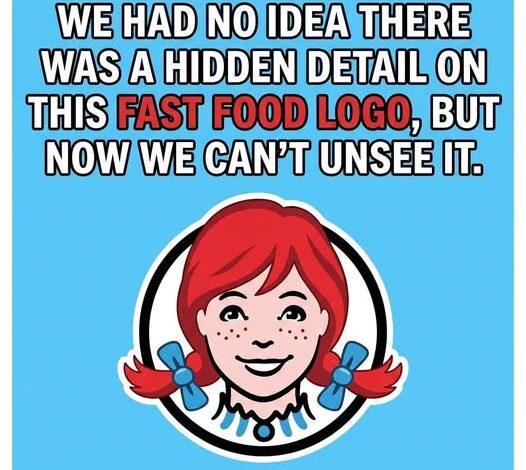
Once you begin noticing the hidden meanings embedded within famous logos, the world starts to look different. Wendy’s famous logo contains what many people interpret as the word “MOM” subtly woven into the ruffles of her collar, creating an unconscious association with homemade comfort and family meals. Subway’s logo features arrows hidden within its lettering, suggesting movement, speed, and the journey from one destination to another. Toblerone’s iconic mountain conceals the silhouette of a bear, a tribute to the Swiss city of Bern, often called the “City of Bears.” These details are not random artistic flourishes. They are intentional visual stories, designed to communicate ideas in a fraction of a second.
What makes these symbols so effective is that they often operate beneath conscious awareness. Most people never stop to analyze them, yet they still absorb the message. The brain is remarkably efficient at recognizing patterns and making associations. A single hidden image can create feelings of trust, excitement, nostalgia, or reliability without the viewer ever realizing why. In many ways, modern branding speaks directly to the subconscious mind, bypassing skepticism and appealing instead to instinct and emotion.
Some people find this realization unsettling. It can feel as though every advertisement, package, and logo is part of a larger effort to influence behavior. In a sense, that is true. Marketing has always been about persuasion. Companies spend billions of dollars trying to understand what captures attention, what builds loyalty, and what encourages people to choose one product over another. Hidden symbols are simply one of many tools used to accomplish that goal.
Yet there is another way to look at it.
Behind every clever logo and hidden message is a human story. Someone sat down with a blank page and asked how an entire company, product, or idea could be expressed through a single image. Designers experimented with shapes, symbolism, and meaning. Creative teams debated tiny details that most people would never consciously notice. What emerges is more than marketing—it is a form of visual storytelling.
A great logo communicates identity without speaking. It can hint at history, values, location, purpose, or ambition through the smallest design choices. The hidden bear in Toblerone’s mountain honors a city’s heritage. The arrow in the Amazon logo points from A to Z while simultaneously creating a smile, suggesting both variety and customer satisfaction. The hidden messages become little puzzles, rewarding those who slow down enough to notice them.
That may be the most fascinating lesson of all.
In a world designed to move faster every year, hidden symbols invite us to pause and look more carefully. They remind us that there are layers beneath the surface of ordinary things. What appears simple often contains unexpected complexity. What seems obvious may hold another meaning entirely.
When you start paying attention to these details, you stop being merely a consumer of messages and become an observer of them. You begin asking questions. Why was this color chosen? Why this shape? Why does this logo feel trustworthy, exciting, or familiar? Instead of passively absorbing information, you learn to decode it.
That shift creates a surprising sense of empowerment. Awareness does not eliminate influence, but it changes your relationship with it. Once you understand how symbols work, you become less likely to be guided by them without realizing it. You can appreciate the creativity behind the design while still making your own conscious choices.
Perhaps that is the hidden lesson behind every hidden logo.
The world is constantly communicating with us—not only through words, but through images, symbols, and subtle visual cues. Some of those messages are commercial. Others are cultural, historical, or artistic. The more closely we look, the more we discover that meaning often lives in places we rarely think to examine.
So the next time you pass a billboard, open an app, pick up a package, or walk through a store, take a second look. Search the negative space. Study the curves and shapes. Look for the details hiding in plain sight.
You may find a clever symbol, a hidden story, or a message you never noticed before.
And once you see it, you may never look at the world quite the same way again.