I Arrived for Sunday Dinner and Found My Daughter Serving Everyone With One Arm in a Sling. Her Husband Smirked and Said, “She Knows the Rules Now.” I Sat Beside Her and Made One Call.

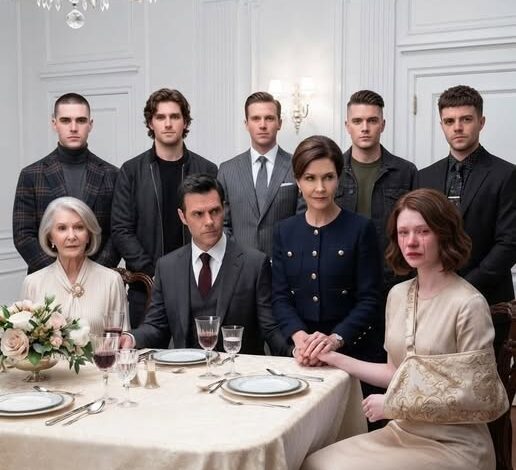
The first thing I noticed when I walked into my daughter’s house was the sling.
The second was Emily’s smile.
Too fast.
Too careful.
“Mom,” she said. “You’re early.”
She was standing beside the dining table, trying to balance a heavy serving platter with one hand while her injured arm remained strapped tightly against her chest.
The room smelled of roast beef, rosemary, and expensive wine.
Everything looked polished.
Everything except my daughter.
When her blouse shifted, I caught a glimpse of dark bruising near her shoulder.
I set down my handbag.
“What happened?”
Emily’s eyes moved immediately toward Adrian.
Her husband sat at the head of the table carving meat.
He did not look concerned.
He looked entertained.
Beside him, his mother, Celeste, lifted her wineglass.
“Oh, don’t encourage her,” she said. “Emily has always been dramatic.”
I ignored her.
“Emily?”
“I fell.”
Too quick.
Too rehearsed.
Celeste smiled.
“She’ll be more careful next time.”
Adrian added, almost casually, “She knows the rules now.”
The room went silent.
His brother stopped chewing.
His sister looked down.
Emily’s face changed.
For thirty years, I had been a prosecutor.
I knew what fear looked like when it was trying to disguise itself as politeness.
I also knew one thing with absolute certainty.
If I lost my temper, Emily might pay for it after I left.
So I smiled.
“Mind if I sit beside my daughter?”
Adrian shrugged.
“Do whatever you want.”
I pulled out the chair.
Under the table, I took Emily’s hand.
It was freezing.
Her pulse raced beneath my fingers.
With my other hand, I unlocked my phone and sent one message.
Come now. Bring Diana. Bring Commissioner Cole.
Then I made a short call.
“Dr. Chen?”
“Martha?”
“I may need you tonight.”
Adrian laughed.
“A doctor? Seriously?”
I ended the call.
“Emily already went to urgent care,” he said. “It’s a sprain.”
My daughter whispered, “It’s fractured.”
Every head turned.
Adrian’s knife stopped.
Celeste stared at her.
“What did you say?”
Emily swallowed.
“My wrist is fractured.”
I looked at her.
“From the fall?”
She shook her head.
“No.”
The silence changed.
Celeste immediately stepped in.
“Emily was upset. Adrian tried to stop her from making a scene.”
“What kind of scene?”
“She was interfering in his work.”
Emily finally looked up.
“I found invoices.”
Adrian’s expression shifted.
“What invoices?”
“Companies billing Westbrook Industries for consulting work that never happened.”
Celeste snapped, “You had no business going through corporate files.”
Emily ignored her.
“There are shell companies. Some share addresses. Some don’t seem to have employees.”
“How much money?”
“I don’t know yet.”
Adrian’s voice went cold.
“There are no files.”
Emily’s eyes moved toward the bread basket.
I followed them.
Under the folded linen was a small black flash drive taped beneath the wicker.
I removed it.
Celeste stood so quickly her chair hit the floor.
“Give me that.”
I put the drive in my pocket.
“No.”
Adrian’s posture changed completely.
“You have no idea what you’re getting involved in.”
Actually, I did.
Twenty-two years earlier, when Westbrook Industries nearly collapsed, my late husband and I invested through our family trust.
Over the years, that investment grew.
The trust now controlled thirty-eight percent of the voting shares.
I chaired the committee deciding how those shares were cast.
Adrian knew I was comfortable financially.
What he did not know was how closely his company was connected to my name.
I looked directly at him.
“How did Emily fracture her wrist?”
“That’s none of your concern.”
“She’s my daughter.”
“She’s my wife.”
He said it like marriage meant ownership.
Emily’s hand tightened around mine.
“He pushed me into the kitchen counter.”
Adrian stood.
“That’s enough.”
“No,” I said. “It isn’t.”
“This is a private marriage issue.”
Private.
I had heard that word for decades.
It was what people called violence when they wanted walls to protect it.
Then Emily whispered, “There’s more.”
Before she could continue, Adrian crossed the room and locked the dining-room door.
The click echoed.
His sister looked up.
“Adrian?”
“Nobody leaves until we straighten this out.”
Celeste moved toward Emily’s phone on the counter.
She picked it up.
Then dropped it into her wineglass.
Emily gasped.
“No more recordings,” Celeste said.
I looked at both of them.
They had just made my job much easier.
Adrian approached me.
“You’re giving me that drive.”
“No.”
“You’re seventy-one years old, Martha. Think carefully.”
I removed my watch and placed it on the table.
A tiny green light blinked beneath the face.
Celeste stared.
“What is that?”
“A secure recorder.”
Adrian went pale.
Everything since I entered the house had been captured.
His comment about Emily knowing the rules.
Celeste dismissing the injury.
Emily explaining the invoices.
The locked door.
The destroyed phone.
The threats.
Then the doorbell rang.
Adrian straightened his shirt.
“All of you act normal.”
He walked toward the front door with the confidence of a man who still believed he controlled the room.
Then he opened it.
And stopped.
Diana Hayes, chairwoman of Westbrook Industries, stood on the porch.
Behind her were six board members.
Commissioner Raymond Cole stood beside them.
Two detectives waited behind him.
Dr. Chen held a medical bag.
Adrian stared.
“This is a family matter.”
Commissioner Cole stepped forward.
“Then unlock the door fully and move away from it.”
Adrian looked at me.
“You called them?”
“Yes.”
“You had no right.”
Emily stood.
For the first time all evening, she answered before looking at him.
“I want them inside.”
That sentence changed everything.
Adrian turned toward her.
“After everything I’ve done for you?”
Emily lifted her chin.
“You made me afraid to talk.”
The detectives entered.
Dr. Chen sat beside her.
“Can I examine your arm?”
Emily nodded.
He asked about the fracture.
The bruising.
The urgent-care visit.
Then one question mattered more than the others.
“Do you feel safe staying here tonight?”
Emily’s eyes filled.
“No.”
Across the room, Diana opened her laptop.
I handed her the flash drive.
“What is this?”
“Emily found it.”
Diana looked at my daughter.
“Do I have your permission to review what you copied?”
“Yes.”
Adrian immediately objected.
“That’s stolen corporate information.”
Diana barely looked at him.
“You can make that argument through counsel.”
The files opened.
Invoices.
Vendor agreements.
Payment approvals.
Internal emails.
A spreadsheet tracking questionable transfers.
Diana called one of the board attorneys over.
They worked in silence for several minutes.
Then she looked at Adrian.
“Who is North Elm Consulting?”
He said nothing.
“Beacon Advisory Partners?”
Silence.
Payments had been authorized using Adrian’s credentials.
Some companies were connected to Celeste.
Others appeared linked to his brother.
One email discussed what would happen if internal auditors noticed unusual activity.
A junior accountant’s name appeared repeatedly.
The implication was obvious.
If the scheme surfaced, someone lower in the company could be blamed.
Adrian’s brother moved toward the hallway.
A detective stopped him.
“Please remain here.”
Diana closed the laptop.
“We have enough to suspend executive access pending investigation.”
Adrian laughed nervously.
“You can’t suspend me the night before I become COO.”
“The promotion was never final.”
His face emptied.
“The board votes.”
One member raised a hand.
“I move that Adrian Westbrook be suspended from all executive duties immediately pending independent review.”
Another seconded.
One by one, hands went up.
Unanimous.
Adrian looked at me.
“This is because of her.”
Diana shook her head.
“No.”
She pointed toward the laptop.
“This is because of that.”
Commissioner Cole played part of my recording.
Celeste’s voice filled the room.
“She finally understands how things work in this family.”
Then Adrian:
“She knows not to argue with me anymore.”
Then later:
“You’re going to give me that drive.”
Nobody spoke.
Adrian turned toward Emily.
“You’re doing this to me.”
Emily stared at him.
“No.”
Her shoulders straightened.
“I’m finally stopping you from doing it to me.”
That was the moment the power shifted.
Not when the board arrived.
Not when the police entered.
When Emily spoke without checking Adrian’s face first.
Dr. Chen helped her into her coat.
Celeste glared at me.
“You’re destroying a marriage.”
I looked at her.
“No.”
Then I put my arm around my daughter.
“I’m helping her leave a house where she is afraid.”
The weeks afterward were quieter.
Medical reports.
Corporate audits.
Therapy.
Lawyers.
The independent review uncovered millions in questionable payments.
Not every transaction was fraudulent, but enough were unsupported or tied to undisclosed conflicts that formal investigations followed.
Adrian never became COO.
His marriage ended too.
He apologized.
Blamed stress.
Blamed Celeste.
Promised change.
Emily asked him one question.
“Would you be apologizing if the board had never come?”
He had no answer.
Living with me again revealed damage I had not seen.
Emily asked permission to use coffee mugs.
Apologized for sleeping late.
Cried after breaking a plate.
The first time it happened, she stood over the pieces trembling.
“I’m sorry.”
“Are you hurt?”
“No.”
“Then we clean it up.”
She stared at me.
“That’s it?”
“Yes.”
She cried harder.
Leaving Adrian had been the dramatic part.
Learning that ordinary mistakes no longer brought punishment took much longer.
A year later, Emily opened a small support center for people leaving controlling relationships.
Legal help.
Financial counseling.
Housing referrals.
Digital-security assistance.
Practical things.
The kind people need after courage has already gotten them through the door.
At the opening, she asked me something.
“Were you scared that night?”
“Terrified.”
“You didn’t look scared.”
“That was deliberate.”
She smiled.
Then a woman stopped outside the entrance.
She stood on the sidewalk clutching her purse, staring at the sign.
Emily noticed.
She crossed the lobby and opened the door.
The woman hesitated.
Emily said gently, “You don’t have to decide anything today.”
The woman’s face crumpled.
“You can just come inside.”
I watched my daughter lead her toward a private room.
One year earlier, Emily had barely been able to answer a question at her own dinner table.
Now she was holding a door open for someone else.
Years later, she told me what she remembered most about that Sunday.
Not the board.
Not the flash drive.
Not Adrian losing his position.
“You sat next to me,” she said.
I looked at her.
“Before anyone arrived. Before you knew everything. You held my hand.”
“I knew you were scared.”
“That was enough.”
For thirty years, I believed evidence was what changed lives.
In courtrooms, it often did.
But that evening taught me that evidence is not always the first thing someone needs.
Sometimes they need one person to notice.
One person to sit beside them.
One person to say, before the whole story has even been told:
You do not have to be afraid alone anymore.