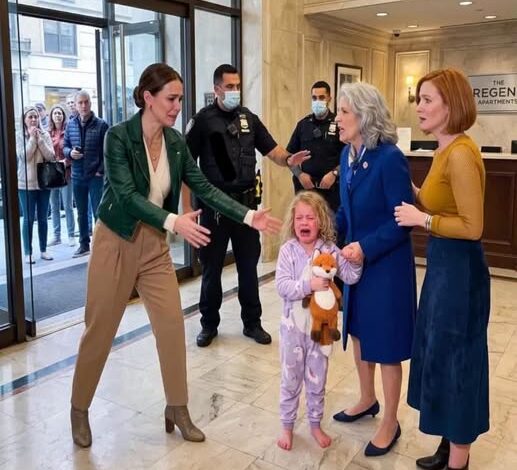
My 5-year-old daughter was sobbing when I walked through the door, convinced the police were there to take her away because of what my mom and sister had told her. I had returned from my work trip early, and what I found broke my heart.

The Day I Came Home Early
At 3:18 on a Thursday afternoon, I turned into my driveway expecting to find an empty house.
My business trip to Denver had ended one day early after a client canceled our final meeting. I had not told anyone I was returning. I wanted to surprise my five-year-old daughter, Lily, with the stuffed fox tucked inside my suitcase.
Instead, two police cruisers were parked outside my home.
The front door stood open.
My mother, Evelyn, waited on the porch with her arms folded. My older sister, Melissa, stood behind her holding her phone, wearing the smug expression she always carried when she believed she had won.
Then I heard my daughter crying.
It was not the frustrated cry of a tired child.
It was the broken, terrified sound of someone who believed her entire world was being taken away.
I ran inside.
Lily sat curled on the living-room rug in pink dinosaur pajamas, clutching her blanket with both hands. Two uniformed officers stood nearby. One had crouched to her level and was speaking gently, but she had buried her face against her knees.
“Mommy!”
She launched herself into my arms so hard that I staggered.
“Don’t let them take me,” she sobbed. “Grandma said the police take bad children away.”
The room went silent.
I looked at my mother.
Evelyn sighed. “Natalie, don’t encourage the dramatics. She needed discipline.”
“Discipline?”
Melissa stepped forward. “She locked herself in your bedroom and refused to come out. Mom was worried she would hurt herself.”
Officer Daniels, the older of the two officers, turned toward me.
“We received a report of an out-of-control child creating a dangerous situation.”
I looked down at Lily.
One cheek was noticeably red.
“What happened to your face?”
She began crying harder.
My mother rolled her eyes. “She had a tantrum because I wouldn’t let her eat cupcakes before lunch.”
Melissa nodded. “She was screaming and slamming doors. We had no choice.”
I wanted to shout.
Instead, I carried Lily to the couch and held her on my lap.
“I would like the report number,” I told the officers. “Please preserve the emergency-call recording. I also want it documented that my daughter was told police would take her away.”
Evelyn laughed.
“You’re overreacting.”
I met her eyes.
“No. I’m taking action.”
Her smile disappeared.
Before the officers left, Lily pressed her mouth against my ear.
“Grandma pinched me,” she whispered. “Aunt Melissa said they would put me in jail if I cried.”
Cold spread through my stomach.
I did not confront them then. I simply held Lily tighter.
Officer Reyes asked whether Lily wanted to speak privately. She shook her head and clung to me. I explained that I would take her to her pediatrician and a child therapist immediately.
My mother rolled her eyes again.
Officer Daniels wrote something in his notebook.
Once they were gone, Evelyn tried to regain control.
“Now that the performance is over, we need to discuss Lily’s behavior.”
“No,” I said. “We need to discuss why you were inside my house.”
Melissa frowned. “We were babysitting.”
“You were supposed to collect Lily from preschool and stay until six. You were not supposed to invite Mom here, search my bedroom, or call the police on a five-year-old.”
My mother stepped closer.
“You should be grateful. I raised two children.”
I looked at Melissa.
“Give me my key.”
She scoffed.
“Now.”
She threw it onto the coffee table. It landed beside Lily’s crayons.
“You’re making a mistake,” Evelyn warned.
I picked up the key.
“You already made it for me.”
That night, Lily slept beside me with one hand wrapped around my sleeve. Every time she woke, she asked whether the police were coming back.
I remained awake until morning.
By eight o’clock, I had contacted an attorney, requested the police report, changed the locks, removed both women from Lily’s preschool authorization list, and scheduled a medical appointment.
At noon, I remembered the camera.
Months earlier, Melissa had installed a small security device above my kitchen cabinet “for safety.” It faced the living room.
She had forgotten about it.
So had I.
The recording began at 11:42 that morning.
My attorney, Caroline Hughes, sat beside me at the kitchen table while Lily stayed safely with my neighbor, Mrs. Patel.
“Whatever we see,” Caroline said, “we handle carefully.”
The footage showed Lily eating a peanut butter sandwich. Melissa stood nearby scrolling through her phone.
Then Evelyn entered through the back door without knocking, carrying a bakery box.
Lily smiled.
“Cupcakes?”
“For later,” my mother said. “If you behave.”
At first, nothing seemed unusual.
Then Lily asked to call me.
Melissa refused.
She asked again.
Evelyn replied, “Your mother is busy. She doesn’t need to hear you whining.”
Lily lowered her head.
My mother began searching the house.
She opened closets, examined my mail, and disappeared into my bedroom. Four minutes later, she returned carrying a folder containing documents from my divorce.
Caroline paused the video.
“Did she have permission to access those?”
“No.”
She made a note and continued.
Lily followed my mother.
“Grandma, Mommy says that’s private.”
Evelyn turned and slapped her.
The strike was quick and casual, as if she were correcting an animal.
My hand flew to my mouth.
On the screen, Lily froze.
Then she began to cry.
Melissa glanced up.
“Mom, come on.”
“She needs to learn respect,” Evelyn snapped.
Lily backed away.
“I want Mommy.”
My mother moved toward her. Lily ran down the hallway, entered my bedroom, and shut the door.
Melissa laughed.
“She’s such a brat.”
Evelyn picked up her phone.
“Then we’ll teach her.”
At 12:07, she called emergency services.
“My granddaughter is out of control,” she said calmly. “She locked herself in a room. We’re afraid she may be dangerous.”
Behind the bedroom door, Lily was not screaming.
Only quiet sobbing could be heard.
Melissa walked into the hallway.
“The police are coming,” she called through the door. “They take bad children to jail.”
She paused.
“Maybe they’ll put you in a little cage.”
My chair scraped backward.
Caroline stopped the recording.
“We have enough.”
“No,” I said. “Play everything.”
When the officers arrived, Evelyn transformed into a worried grandmother. Melissa described Lily as increasingly unstable since my divorce.
Then Lily opened the door wearing one of my sweaters around her shoulders.
She saw the uniforms and screamed.
That was the sound I had heard when I came home.
The following week moved quickly.
Lily’s pediatrician documented the redness on her cheek and signs of emotional distress. Her therapist recorded severe fear associated with police, imprisonment, and separation from me.
The preschool removed Evelyn and Melissa from all access lists.
Then we went to court.
My mother arrived in pearls and a navy blazer, dressed like a respectable grandmother who expected to be believed.
Melissa sat beside her husband, Grant.
Their attorney called the incident a misunderstanding. He claimed Evelyn had acted out of concern and suggested my divorce had made me emotionally unstable.
Then Caroline played the recording.
The courtroom became silent.
Grant watched his wife threaten a child with jail.
When the slap appeared on screen, Evelyn’s attorney stopped taking notes.
When the emergency-call transcript was compared with the footage, the judge’s expression hardened.
Evelyn tried to interrupt.
“That child is difficult—”
The judge raised one hand.
She stopped speaking.
A protective order was issued, barring both women from contacting Lily or approaching our home, her preschool, or her therapist’s office. The matter was referred for investigation into the misleading emergency report and the physical contact captured on video.
My mother waited until we reached the hallway before she began screaming.
“You ungrateful child! After everything I’ve done for you!”
“You called armed strangers into my home to frighten a five-year-old.”
“I was teaching her!”
“No,” I said. “You were teaching me.”
Melissa began sobbing.
Grant had stepped away from her. The school where she worked with children had learned about the proceedings and placed her on leave.
“My career is finished,” she cried. “Tell them it was a misunderstanding.”
I remembered Lily trembling in my arms.
“No.”
“You’re ruining my life!”
“You threatened my daughter because she cried. You ruined your own life.”
Justice came quickly.
Healing did not.
For months, Lily covered her ears whenever she heard a siren. The first time a police car stopped beside us in traffic, she panicked so violently that I had to pull over and hold her until she could breathe.
Her therapist worked patiently with her.
Months later, Officer Reyes visited Lily’s preschool for a community-safety event.
“Will you stay with me?” Lily asked.
“Every minute.”
At first, she hid behind my leg.
Then Officer Reyes knelt.
“It’s nice to see you again, Lily.”
“You didn’t take me away,” Lily whispered.
“No,” the officer said. “That was never my job.”
“What is your job?”
“To help keep people safe.”
Lily considered this, then held out the stuffed fox I had brought home from Denver.
“This is Juniper.”
Officer Reyes shook Juniper’s paw with great seriousness.
Little by little, the fear loosened its grip.
Six months later, Melissa sent me a three-page letter. The first page blamed our mother. The second blamed stress.
On the final page, she wrote:
I frightened Lily, and I knew exactly what I was doing.
I kept that page.
Years later, while we decorated cupcakes for Lily’s eighth birthday, she asked a question.
“Mommy, was I bad when Grandma called the police?”
I set down the frosting knife.
“No. You were scared, and some adults made a cruel choice.”
“I didn’t do anything wrong?”
“You did nothing wrong.”
She studied my face carefully.
Then she smiled.
“Can we make the frosting blue now?”
That was the real ending.
Not the courtroom.
Not the protective order.
Not my mother and sister screaming after years of making everyone else afraid.
The true ending was my daughter standing safely in our kitchen, strong enough to ask the question and secure enough to believe the answer.
I came home one day early and found Lily sobbing in front of two police officers.
One week later, my mother and sister were the ones crying.
But years afterward, my daughter was laughing.
That was the only sound that mattered.