My Twin Sister Passed Away in a Car Crash Ten Years Ago – Last Monday, a Dentist’s Office Called and Asked Me to Pick Her Up

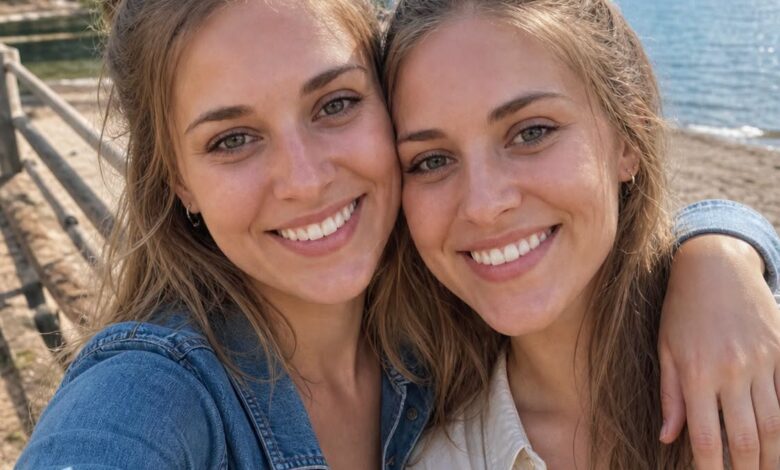
For six years, I mourned my twin sister.
Then I found out she was alive.
You would think that would be the hardest truth a person could absorb—that someone you buried in your heart had been breathing somewhere else all along.
It wasn’t.
The hardest truth came later.
Clara remembered me.
For six years, she knew I existed.
And she chose not to come home.
When I first saw her again, my mind refused to accept what my eyes were telling me. There were differences, of course. Six years had passed. Her hair was different. Her face had changed in the subtle way adulthood changes all of us. There were new lines around her eyes, a different way of holding herself, a confidence I didn’t recognize.
But she was Clara.
My Clara.
The face I had known almost as well as my own.
The person who had occupied the other half of every childhood photograph.
The sister whose absence had become a permanent room inside me.
For years, I had imagined impossible reunions.
A hospital calling.
A stranger finding her.
Clara appearing at the door with no memory of where she’d been.
In every fantasy, there was an explanation large enough to excuse the silence.
She had been injured.
Confused.
Trapped.
Unable to remember us.
Unable to find us.
Anything except the truth.
She had remembered.
When she finally admitted it, I felt something inside me collapse.
“You knew?”
Clara looked down.
“Not at first.”
“How long?”
She didn’t answer.
“Clara.”
Her eyes filled.
“How long did you know who I was?”
She whispered the answer.
“Years.”
I stared at her.
Years.
One word rearranged everything.
All those birthdays when I had lit a candle for her.
All those Christmases when Mom became quiet because there should have been another chair at the table.
Every anniversary of the crash.
Every sleepless night.
Every time I had imagined my sister frightened, lost, dead, or lying somewhere without anyone knowing her name.
She had been alive.
And eventually, she had known exactly who we were.
“You remembered me?”
“Yes.”
“And you stayed away?”
She began crying.
I didn’t.
Not yet.
I was too angry.
“Did you remember Mom?”
“Yes.”
“Dad?”
“Yes.”
“Our house?”
She nodded.
I laughed once, but there was nothing funny in it.
“So you remembered everything.”
“Not everything.”
“Enough.”
She flinched.
Part of me was glad.
I wanted the words to hurt.
For six years, grief had hurt us without anyone to blame. Now suddenly there was someone sitting across from me who had made a choice.
And I wanted her to understand what that choice had cost.
“You let us bury you.”
“I know.”
“No, you don’t.”
My voice shook.
“You don’t know what that means.”
She tried to speak.
I wouldn’t let her.
“You don’t know what Mom became. You don’t know what Dad looked like every time the phone rang. You don’t know how many times I woke up thinking I’d heard you in the hallway.”
“I’m sorry.”
“I went to therapy because I couldn’t look in a mirror.”
That stopped her.
Being twins had always meant seeing Clara everywhere.
After she disappeared, my own reflection became cruel.
Same eyes.
Same mouth.
Similar gestures.
People told me I should be grateful to have something of her still visible.
They didn’t understand.
I didn’t want something of Clara.
I wanted Clara.
And now she was sitting in front of me explaining that eventually she had remembered all of it and still decided that disappearing was easier than returning.
“Why?” I finally asked.
Clara wiped her face.
For a long time, she said nothing.
Then she told me something I wasn’t prepared to hear.
“Because for the first time, I wasn’t your twin.”
I stared at her.
She explained slowly.
After the crash, after the confusion and the fragmented memories, she had begun building another life.
At first, she hadn’t understood exactly what she had lost.
Then pieces returned.
Names.
Images.
Childhood.
Me.
And with those memories came something else.
The old feeling of never quite existing alone.
We had always been Clara and me.
The twins.
People compared everything.
Who was quieter?
Who was prettier?
Who was smarter?
Who was more outgoing?
Who dressed better?
Who got better grades?
If I succeeded, Clara was asked about it.
If she struggled, someone compared her to me.
Even kindness became comparison.
“You two are practically the same person.”
We used to laugh at that.
Apparently, Clara hadn’t always found it funny.
“I loved you,” she said. “I love you. But I didn’t know who I was when you were there.”
The sentence felt like an accusation.
“So you erased me?”
“No.”
“You erased all of us.”
“I was scared.”
“We thought you were dead.”
“I know.”
“You keep saying that.”
Her voice broke.
“Because I don’t have anything better to say.”
Then she told me about the life she had built.
A job nobody had helped her get because of our family.
Friends who had never met me.
People who knew Clara without asking which twin she was.
She bought her own clothes without anyone saying whether I would wear them.
She chose her own routines.
Her own apartment.
Her own favorite café.
Her own mistakes.
For the first time in her life, she said, nothing belonged to both of us.
I hated hearing it.
Because beneath my anger was something worse.
I understood.
Not completely.
Not enough to forgive her immediately.
But enough to see the shape of what had happened.
Clara had discovered independence in the cruelest possible way.
And once she had tasted it, coming home meant risking becoming half of something again.
“So my grief paid for your freedom,” I said.
She covered her face.
That was when I finally cried.
Not gently.
Six years came out at once.
“I was grieving you while you were learning how to live without me.”
“I know.”
“Stop saying that.”
“I’m sorry.”
“I hated myself for surviving.”
She looked up.
“I know.”
This time, I let her say it.
We sat there crying across a table that suddenly seemed far too small for everything between us.
I wanted to forgive her.
I wanted to punish her.
I wanted to hug her.
I wanted to leave.
Most of all, I wanted time to reverse itself and give us an ending that didn’t require choosing between love and betrayal.
But time doesn’t negotiate.
The sister sitting across from me was not the Clara who had disappeared six years earlier.
And slowly, painfully, I realized I wasn’t the sister she had left either.
We had both changed.
I had spent years trying to preserve her in memory.
The Clara I mourned remained young.
Frozen.
She still laughed the same way.
Still borrowed my clothes without asking.
Still knew exactly what I meant from one look across a crowded room.
But that Clara no longer existed.
Even if there had never been a crash, she wouldn’t exist.
Six years would have changed her anyway.
They had changed me.
That realization loosened something.
I didn’t actually want the girl I had buried back.
I wanted the impossible.
I wanted the lost years restored.
I wanted my parents’ grief erased.
I wanted my own pain refunded.
I wanted Clara to return exactly as she had been so we could continue from the sentence where life had interrupted us.
None of that was available.
What was available was the woman sitting across from me.
Complicated.
Guilty.
Independent.
Familiar and strange.
My sister.
But not my other half.
Maybe she never should have been.
“What happens now?” Clara asked.
I almost laughed.
For once, neither of us knew.
There would be no dramatic reunion capable of repairing six years.
No hug powerful enough to erase what she had chosen.
No apology large enough to rebuild trust overnight.
So I said the smallest thing I could think of.
“Lunch.”
She blinked.
“What?”
“Thursday. Lunch.”
“That’s it?”
“That’s all I can promise.”
She nodded.
“Thursday.”
We met at a little café.
I arrived first.
When Clara walked in, I felt the old instinct to wave too enthusiastically, to collapse the distance, to pretend we had already repaired everything.
I resisted it.
She sat across from me.
We talked.
Not about the crash.
Not at first.
We talked about work.
Books.
Her apartment.
My terrible neighbor.
Ordinary things.
It felt awkward.
That was good.
Awkward meant we weren’t pretending.
When we left, Clara stopped at a bakery.
She bought two pastries.
The woman behind the counter started putting them into one bag.
“Separate bags, please,” Clara said.
I looked at her.
She looked at me.
For a second, neither of us spoke.
Then I smiled.
Separate bags.
It shouldn’t have meant anything.
It meant everything.
All our lives, people had treated us as a matched set.
Two girls.
One identity.
One story.
Then tragedy tore us apart, and Clara had gone too far in the opposite direction, believing she could become whole only by removing herself from everyone who had known her before.
Now maybe there was another way.
Not halves.
Not strangers.
Two whole women.
Sisters by choice as much as blood.
There would be consequences.
Questions.
Anger.
Our family would have its own reckoning with her.
I couldn’t protect Clara from that, and I wasn’t going to.
She had to face what her silence had done.
Love did not require me to erase accountability.
But anger did not require me to erase love either.
Both could exist.
That was the uncomfortable middle we had entered.
Some Thursdays were easy.
Others weren’t.
Sometimes she mentioned something from those six missing years and resentment hit me so hard I could barely answer.
Sometimes I described our family’s grief and she went silent.
Once she left the table crying.
The next Thursday, she came back.
That mattered.
She kept coming back.
And I kept showing up.
Trust didn’t return as a revelation.
It returned as repetition.
Thursday.
Then another Thursday.
A message answered.
A promise kept.
A truth told even when lying would have been easier.
We were not rebuilding what we had.
That relationship belonged to two girls who no longer existed.
We were building something else.
Something less effortless.
More deliberate.
Maybe even healthier.
I still grieve those six years.
I think I always will.
There are losses reunion cannot repair.
Clara was alive, but the time was dead.
No miracle could resurrect it.
What I could do was stop demanding that the future compensate me for the past.
Clara could not return the birthdays.
She could not give Mom back the nights she cried.
She could not undo my guilt.
She could only decide what she did next.
So could I.
Thursday lunch became our answer.
Small.
Almost embarrassingly ordinary.
But perhaps ordinary was exactly what we needed.
No dramatic promises.
No declarations that everything was forgiven.
Just two women sitting across from each other, slowly learning names, habits, opinions, and boundaries that once would have seemed unnecessary.
Sometimes we still bought pastries afterward.
Always separate bags.
I came to love that ritual.
It reminded me that closeness does not require merging.
That sisterhood doesn’t mean sharing one identity.
That loving someone does not entitle you to every part of them.
Clara had learned that lesson through disappearance.
I had learned it through grief.
Neither of us would have chosen the cost.
But there we were.
Alive.
Together.
Different.
For six years, I believed the greatest miracle would be getting my twin back.
I was wrong.
The miracle was discovering that I didn’t need my twin back.
I needed Clara.
The woman she had become.
And she didn’t need to return as my missing half.
She could sit across from me as a whole person.
So could I.
We couldn’t begin again at the beginning.
Too much had happened.
We couldn’t pretend there had been no betrayal.
There had.
We couldn’t erase the love either.
That had survived too.
So we began where we actually were.
In the middle.
With anger.
Grief.
Relief.
Boundaries.
Two pastries.
Two bags.
And a standing appointment for Thursday.
It wasn’t the reunion I had imagined during six years of mourning.
It was smaller than that.
Harder.
More honest.
And somehow, because neither of us had to disappear inside the other anymore, it finally felt like something that might last.